Your Name and Likeable Leads

Related image

DON’T CALL IT A COMEBACK! (But I do recall saying we’d get to 200 someday…)

Ladies, gentlemen, and everyone else welcome back after the longest of hiatuses. I have absolutely zero excuses planned and to be blunt any more exultations will probably scare anyone away before we begin in earnest. But first, some minor notes to take care of: Happy Armistice Day, a belated Happy Halloween and every other holiday that’s passed us by since MARCH (dear lord…), and most importantly happy NaNoWriMo. I hope every one of your projects is off to a flying start.

With all of that out of the way, let me meander into today’s topic. Back in April, I caught a screening of Kimi no Na Wa (Your Name). For the uninitiated, the premise of the film is that two teenagers start randomly switching bodies when they sleep. If you sift back through enough of my previous essays here, you may get a grasp of just how much I love fiction that depicts dreams in a meaningful way. You may also catch my penchant for animated films. So couple a movie all about dreams with some of the most gorgeous animation I’ve ever seen and what do you think happened?

Well clearly I was knocked into an 8-month coma that I only just came out of because I finally got a bluray copy of Your Name. Obviously.

So with the spell broken, what can we take away from what instantly became my favorite film of the 2010s? Given that the film only just became officially available in the United States, a full-fledged “plotting” or retrospective seems out of the question because spoilers are a thing. And this film in particular is very difficult to talk about without spoiling anything. So instead we’re going to talk about the premise and how Makoto Shinkai presents his characters. Because as we all should know by this point, you can have the coolest premise in the world but if your characters can’t match it… whelp.

“Mitsuha and Taki are complete strangers living separate lives until they suddenly switch places. Mitsuha wakes up in Taki’s body, and he in hers. This occurrence happens randomly, and they must adjust their lives around each other.”

It’s not an unfamiliar premise at all. The whole “literally spending a day in someone else’s shoes” plot is tried and true. However, there’s a slight twist to this particular rendition. Typically in these types of stories, the characters know each other, or are at least familiar with who the other is. They’re generally rooted in misunderstandings about how tough life is and how much easier other people have it. In this circumstance, Mitsuha and Taki have never met and each live in towns the other has never visited. Mitsuha lives out in a small rural town while Taki lives in Tokyo. This is much less a story about two characters needing to learn a lesson about how they lead their own lives and more about surviving this ordeal.

And that’s very much what this film’s plot is. An ordeal that needs to be survived. Small-town girl has to live the occasional day in the life of big-city boy and vice-versa. While this happens to them when they’re ‘dreaming’ everyone around them unwittingly takes part in these experiences. Both Taki and Mitsuha bring their different sensibilities to each others’ lives and shenanigans ensue. The focus isn’t to learn something, not to come out the other side a better person, but to come out the other side with social standing and relationships in tact.

And this simple goal is the first step in creating a pair of the most likeable protagonists I’ve ever seen in film.

Took me long enough to get to the crux of this piece eh?

Often the subject of storytelling is having good, compelling characters. People with flaws and relatable talents that an audience can latch onto to carry them through the writer’s world and narrative. But compelling characters aren’t always likeable and likeable characters aren’t always compelling. Let’s pull a couple of examples from high fantasy and science fiction. Frodo from Lord of the Rings is sort of an ordinary person, about as average as you can be, save for an incredible quest thrust upon him. However, the true characters of interest in LotR I would argue are Samwise and Aragorn. The former is the rock Frodo clings to in the river of madness that is the One Ring and the latter is a complex character with a certain weight of expectation while also having the primary romantic interest in the trilogy. Rand from The Wheel of Time starts off as a backwater country boy but grows to wield incredible power, somewhat distancing himself from the audience. Perrin and Nynaeve on the other hand bear the emotional burden of the story given their respective involved love affairs. And finally, Luke from Star Wars plays a similar role to Rand, and takes a back seat to the quick-talking Han and the woman-in-charge Leia.

While having fantasy elements, Your Name probably fits more in line with the slice of life genre rather than epic fantasy like the above examples. However, the down to earth nature of the story plays into how the more likeable characters from the stories above are created. As mentioned above, while the main hero is out saving the world, the side characters have the more relatable goals. For Samwise it’s to get himself and Frodo home. For Aragorn it’s largely about getting to be with Arwen. For Perrin, it’s about keeping home safe and being with Faile. For Nynaeve it’s all about being with Lan. For Han it’s about money and then the girl. For Leia it’s about keeping her friends safe.

The beauty about the slice of life genre is that the hero doesn’t need to save the world. In fact, it would be a bit of a misnomer to call the protagonist in these types of stories a hero. They’re just going through their life the same as you and me. In the case of Your Name, something completely insane happens to the two leads and how do they respond? By trying to figure out why? How to stop it? Save the world? No. They simply try to get through life while occasionally trading days in each others’ bodies. The reaction is the most logical for ordinary people. I mean, how would you even begin to attack this scenario?

Which is why Taki and Mitsuha work so well as characters. They’re as close to ordinary as possible while going through an extraordinary experience. It produces some fantastic drama coupled with well-timed humor. I mean, how else is a high school boy supposed to respond when he dreams that he’s in a girl’s body? How else is a high school girl supposed to react when she dreams that she’s in a boy’s body?

Rather than explain the phenomenon, the first two acts of the film are devoted to introducing the characters’ lives and relationships through each others’ perspectives. The audience is thrust into the scenario the same way the main characters are. They have friends, family, school life, extra-curricular responsibilities and we come to learn about them as they’re learning about each other. The film juggles the emotional highs and lows of being a teenager with the spiritual highs and lows of literally being someone else. Since the two people on this spiritual journey are high schoolers, what is the primary concern? Survive this back and forth without losing their neatly carved social niche. It’s such a simple desire.

And from this desire spirals a story of personal growth, understanding, and finding one’s place in the world.

Seeing a girl for the first time, having a vivid dream that you’re living someone else’s life, such mundane occurrences in the life of a fictional character. And yet, these moments can mean everything. And unlike being the Chosen One and getting the power to save the world, these are moments that happen to us.

The beauty of fiction is that we can have mundane characters do extraordinary things. But keep them well in touch with the mundane, with us. Remember why they’re doing what they’re doing. It’s about saving the Shire, getting the guy, keeping all your friends after a crazy dream. If that means you throw a ring in a volcano, blow up a Death Star or two, or switch bodies a few times, then that’s what makes it fiction. All the mundane stuff is what keeps it real.

And if your fictional premise meshes perfectly with your character’s ordinary motivation, that’s when your story will hit home.

“Scenes in the Lamplight”

Tom stumbled out of the bar behind Luke, who was handling his drink with much more grace. His breath turned to steam before his eyes as he asked his friend “You sure you good to drive?” He spared a look up at the night sky. There was snow up in those black clouds. Hanging there. Waiting.

“I’m definitely better than you.” He answered in a deliberately soft voice, making Tom self-conscious of his noisy breathing and how loudly he was talking. “I’ve gotten home on twice what I’ve had tonight.”

Of course Tom didn’t have an alternative and continued to follow Luke to his car, breathing hard and focusing on not falling down. His head was swimming. It had been a full day of finals, drinking, and wishing everyone safe travels for the holidays. Mostly drinking though. And Maddy’s blue dress…

But the evening was over, and it was time to get into Luke’s frigid red car which was five years too old to be in style and ten years too recent to be claimed a classic. The seats were poor imitations of leather, the heat didn’t work, and there was a long-ago emptied Wendy’s styrofoam cup protruding from under the passenger seat. Tom fell into the seat, out of the frost-laced air. The back seats were almost completely uninhabitable, acting as storage space for returned term papers, a worn out backpack, and a broken umbrella.

“Buckle up.” Luke ducked in and slammed the door with an audible grunt and a dull thunk. “You can’t slide around my car in a drunken stupor while I’m driving.” He forced the key into the ignition and after a slight delay, the engine sputtered to life. “And roll down the window if you’re going to be sick.”

They peeled out of the parking lot and down the mostly deserted street. All those who weren’t spending one last night on campus had long left for home and those who were would stay cooped up in that dive until they were thrown out. The blonde bangs drifting along the top edge of Tom’s vision reminded him of the haircut he would get once he himself left for home.

“You sure Maddy didn’t need a ride?”

“She said she was going to walk back to her dorm with her roommate.” Tom slurred, “It’s only a five minute walk.” The headlights of the occasional car travelling in the opposite direction blurred by, flashes of white in the foggy windshield.

“She wouldn’t have approved of the state of my car anyway.” He took his hands off the wheel for a second to blow hot air into them. “A cold bed for you tonight then.”

“I could come snuggle with you if you like.”

“I think I’ll pass…”

Another set of headlights rolled by. Tom was utterly disappointed by not convincing her to come home with them. As much as he would have loved to blame it on Luke’s car, the fact of the matter was she hated being out with him in public when he was thoroughly intoxicated. Oh but she had been wearing that dress he liked on her so much and…

Luke sighed, “What do you think I should do?”

“Wha?”

“Were you even listening? Graduation is coming up in the spring man. You and Maddy have plans right?”

“Well she’s got graduate school in… uh… yeah…” The way she laughed at his jokes when she was drinking (bloody hypocrite)…

“But you’re going with her.”

“Right.” Those damn headlights were too bright. Tom could feel the headache coming on. Weren’t those supposed to wait until the morning after?

“Hey man, don’t worry. It’ll all work out. You can come up and visit whenever you like.” The next set of headlights were blinding. Bastard needed to turn off his brights…


I’m standing in Maddy’s backyard with her parents, twenty three neighbors (including my parents), eighteen distant family members and nine friends from school. The six foot wooden fence was freshly stained a week ago in anticipation of this gathering, a very light brown so as not to clash with the lawn and flower beds. The scent of relatively new mulch was thankfully covered up by chlorine, charcoal, and (overwhelmingly) grilled meat.

“So what’s it feel like to be done with school forever?” Her mother asks me, holding a margarita in one hand and fiddling with one of those tiny drink umbrellas with the other.

“I’m just glad I didn’t trip walking up during the ceremony.”

“That doesn’t answer my question.” Her eyes meet mine knowingly. She’s a tough woman, short in stature but unbending in age. Her cheeks were beginning to sag a little, but she would have nothing to do with Botox.

“It definitely feels odd. For the moment it feels like I could just drift away. There’s no pressure holding me down right now.”

“That’s what it was like for me.” She nods and begins to reminisce, voice drifting off and attention going with it. I decide to only half-listen.

The backyard is expansive. The pool contains ten of the younger kids, because you can’t host this many people in a backyard without a pool. The color of the sides makes the water appear faint shade of green. Yellow and blue flowers hide most of the dark brown mulch in their beds, looking in on the party from the edges of the yard.

“So you’re going to go with Madison up to Wisconsin and finding a job?” She asks, returning my attention fully to our conversation.

“Yeah, I guess it’ll depend where we end up living.”

“Won’t you be in the city?”

“I don’t remember off the top of my head, Maddy knows all the details.”

She creases her brow, an intimidating act when directed right at you. “You’re going to be moved in and everything before the semester starts in the fall. Don’t you think you should have the details more in mind?” Her expression softens, “It’s a party. I’ll nag you later. Stop letting me keep you from the food. I’ll bet you’re hungry after that long hot ceremony. The first round of burgers should be done by now.” She shoos me away and turns to talk with one of the neighbors.

The grass is like a carpet as I walk towards Maddy’s father and uncle tending the grill halfway across the yard on the grey cement patio. It’s only big enough for the grill, for as Maddy pointed out sometime five years ago: cement in a yard is an ugly thing. A slightly raised wooden porch serves as home to occupied and unoccupied chairs and two round, glass tables. I step out of the broiling sunlight and into the slightly less insufferable shade. A bead of sweat slides down my cheek before I scrub it away. I can hear some of the banter coming from around the grill as I approach.

“Shit…” Her father muffles with gritted teeth, mindful of the younger kids around.

“What happened?” That didn’t sound like her uncle…

“An accident.” Distant and deep…

“…What?”

“Burnt some of the burgers.” Maddy’s dad groans. He’s a big enough man that even in his grilling apron and Hawaiian shirt any hint at dissatisfaction was unnerving and intimidating. His bald head shines in the beam of sunlight it manages to catch. I actually have to look away (hopefully he’s wearing sunscreen). The aroma from earlier was beginning to get overwhelmed by the smell of burnt meat.

“I told you the grill was too big.” The uncle chuckles, taking a long drink from his beer can.

“Oh well.” All traces of his earlier frustration are gone. “We have more than enough to spare a few mistakes.”

“I’ll come back then.”

“Yeah. Sorry Tom.” He looks at me, eyes shifting to focus on my empty hands. “Why aren’t you holding a drink? Go check the fridge in the kitchen.”

“Sure thing. You want one?”

He shook his head while Maddy’s uncle raised his bottle, “I’m good.”

The wooden porch is hot enough to quicken my pace on my way to the door. It hasn’t been out of the sun for very long. I reach the sliding glass door to the kitchen and almost collide with Maddy who is on her way back out.

Her hair, which refuses to ever completely straighten, cascades around her shoulders and down her back. Those emerald eyes take on a unique amusement as she looks down her perfect nose at me from inside the house, which is a step up. She hardly ever gets the chance to be taller than me and savors it. Fortunately, I have my own responses for when she decides to milk enjoyment of these rare situations. Like admiring her dark green bikini for instance. Not my favorite of hers, but…

“Hey. I’m up here.” There was no scorn or anger in her voice, and I look up. I don’t completely drive the image of her nearly naked figure from my mind though. She leans down and we kiss (she still tastes of the pool’s chlorine) before she glides out of my way and goes to talk to her dad. I spare one more look at her as she walks away before stepping into the house, silently thanking whatever deity made it so society would at times willingly permit what was essentially public nudity.


“Does anyone want refills on their eggnog?” she asks from the kitchen. The low murmur of the congregated lot becomes accented by a couple of “I do’s” and a spattering of “Me’s” from all around the downstairs as her message is relayed through the disparate rooms and amongst the myriad circles of conversation.

I crane my neck away from my discussion and brush traces of hair from my view (I need a haircut) of Maddy in her red sweater presiding over the kitchen counter. The hot ceramic mug in my hand is starting to make my palm sweat. I look down to swirl and study the clouded beverage (Half-empty). It’s not quite time for a second helping yet…

We finally decided to throw a Christmas/Eid/Chanukah/Kwanza/Whatever-Holidays-I’ve-Forgotten party for our neighbors. I hadn’t been expecting it to be as popular as it is. Neighbors, friends of neighbors, extended relatives of friends and neighbors all packed our house, warming the place more than the fire behind the glass fronted hearth ever could. A rainbow of sweaters and sweatshirts with people inside them surround me in my own living room. A wider assortment of coats and jackets hang in closets and on banisters. The invite we had sent out proclaimed dress was to be casual, so everyone is wearing variations on the same shade of blue jeans. All the chairs are taken and still more than half of those present are standing. I might have to insist on a guest limit next year.

Having contemplated Maddy’s offer from so far away, and deciding against it, I refocus on the conversation I had been having with of my next-door neighbor’s brother. He is a decade older than me. His black hair looks to be receding and he’s wearing an argyle sweater featuring varying shades of green, none of which manage to match the tree brushing the ceiling right behind him. His glasses wink with the varying colors of the holiday lights as he shifts ever so slightly, back and forth, absentmindedly. Dave, I think he said his name is… (I’m bad with names).

“So how long have you been here Tom?” His voice was beginning to slur. How many mugs of eggnog had he had to my one-half?

“Well, Maddy and I moved to Middleton right after she finished grad school. I guess we just fell in love with the city while she was in school and we decided not to leave. I’d say we’ve been in this house for about six years.”

“No, no. That’s not what I meant.” Something odd about his tone…

Before I could open my mouth, a muted musical ringtone filled the air. After a moment of everyone instinctively checking their phones, Dave answered his, offering as polite a finger as could be offered and retreating to the opposite corner of the room (this one being taken up by the tree).

I take the time to down most of the rest of my drink. The sweet cream and bitter alcohol threaten to sear my tongue. How did I make it through the first half of the glass?

A glance over to Dave suggests he might be a while on the phone, so it’s time to take up that offer of a refill. Stepping gingerly, to avoid outstretched legs and scattered groupings of cloaked feet, across the cold hardwood floor in my own navy blue wool socks I make my way towards the kitchen. There’s a rug here or there, but we learned from apartment life that carpets are such a pain to maintain the illusion of cleanliness.

There’s a small step up from the living room to get to the kitchen and main hallway that leads to the dining room and another, smaller sitting room. All of which are filled to capacity. The dim aurora of the tree lights gives way to the consistent glow of the kitchen lights as I make my approach.
As I make ready to complete the step up out of the living room I’ve made nine thousand three hundred forty seven times (an estimate), I feel the muscles in my right leg convulse and spasm, before locking up completely. My toes catch the lip of the step and before I have time to yelp in alarm, I crash to the floor in a heap.

Instantly, I’m aware to the silence that has fallen over the room and the quickened pace with which Maddy approaches me (also the pain damn it).
Pushing myself off my chest, I roll over, sit up, and begin to massage my calf, throwing out a muttered curse here and there. My toes are curled tight and my leg is rigid.

“Are you okay?” I hate looking at Maddy’s face when she’s concerned or upset.

“Yeah… just some… cramps.”

“It looks like you have a big bruise on your forehead too.”

“Is it bleeding?”

She shakes her head, as I try to force that grimace into a grin. I can feel the muscles in my leg starting to loosen. I flex my toes a couple of times, while human voices slowly start to phase out the oppressive silence.

“Okay, I’m fine. Let me see about that eggnog.”

She helps me to my feet, taking notice of my slight limp as she escorts me. “Are you sure you’re okay?” The concern is creeping back into her voice. Not acceptable.

“It’s just a really bad cramp. I’ll be better by tomorrow.”


I can taste the freshness of the air blowing off Lake Mendota, carried on a southeasterly wind from the cold, dark waters of University Bay. The simple cane in my hand clicks with each step on the smooth, rock ground. Each piece of the grey is unique, but they all fit together perfectly. A stone star at the center of the dais is surrounded by rigid slab benches. The sun hangs directly overhead, limiting the shade that could be provided by the nearby trees.

My right leg drags ever so slightly when I try to have it follow my left step for step. It wasn’t just a bad cramp I had at the holiday party one and a half years ago (damn Babinski’s sign). My condition means Maddy is carrying both the picnic basket and parasol. She pretends not to mind, but every tick of the wood on the stone is a reminder of how useless I have become. Not that I had been so helpful before with her advanced degree and my not so advanced one.

“This seems like a good spot.” Her tone tells only of pleasure at the agreeable June day. She points to a place under the green trees directly overlooking the water where their narrow trunks and twisting branches can shield us from the sun. The nagging click of my glorified stick fades when we step off the stone area. She closes the parasol, lowers the basket to the ground and withdraws from it the checkered blanket we are going to sit on.
Eager to help in whatever way I can, I grab one corner and help her spread it over the green blades of grass. With considerably more effort, I force my legs to fold and drop awkwardly to a seat beside her in the specks of sunlight peppering the shade.

“How do you feel?” I can’t do much these days without being asked this or another similar question. I always answer as I feel an ordinary person would.

“Hungry. Let’s eat.”

And she is never satisfied with such answers. “I meant your leg.”

“Feels as fine as when we set off.”

“You can’t really feel it can you?”

“No. But I imagine the fresh air is good for me. At the very least it can’t be bad right?”

The shadow of doubt crosses her face (we really don’t know what we’re doing), “Too late to worry about it now I suppose. What’d you pack me?” She begins to rummage through the basket. “You didn’t pack it in a very logical way.”

Out come napkins, apples, cottage cheese, chips, and bottles of water before finally a pair of sandwiches emerge. She raises an eyebrow at me.
“I was thinking about what kind of sandwiches to make before thinking of what might go with them. I packed in the order I thought of stuff.”

“You’re lucky they’re not squished.” She hands mine to me, which I take before lounging back to a more comfortable position. It isn’t much less awkward though.

Looking around the area, I see other people out enjoying the amiable weather. Students on break, dogs on a walk (with owners in tow), and other couples spending time in each other’s company. All sitting, jogging, reading, eating, drinking or talking. One of the active couples speeds by along the path, allowing us to only catch half a sentence of their conversation. The beginning of an awkward question from the guy.

“…So it’s going on three months now and…” An old, tired voice for one as young as him…

The rest fades away and I offer Maddy a small smile. She looks confused for a moment before asking “What is it?”

“I remember when we were that young. Back at undergrad, when three months was a long time.”

An eternity filled with little eternities is all our lives have been. And here we sit finding hardly any time has gone by at all. How long ago was it I first tripped over that living room step? It’s silly to have to remember such a trivial incident. Well, we didn’t have a holiday party last year (I refer you to my earlier year and a half statement)…

“You’re making me feel old.” She pulls me out of my spiral. There was agitation in her voice, but it was easily outweighed by amusement, her joy at the thought that we are growing old together. I take notice of her still radiant, brown hair. The medical statistics and bathroom mirror tell us every morning we aren’t.


I never understood what it was about dim lighting that made a restaurant so up-scale. The more I think on it: having to squint to read menus, hiding people’s faces from each other, and guaranteeing the food never looking unappetizing, the more it irritates me. Reducing electricity bills and driving up prices a dollar or two, hiding in the guise of ambiance and atmosphere.

And here we are, at a white clothed table with plates almost cleared and a check on the way.

What had afflicted one leg now claimed the other. It means we only needed one of the restaurant’s chairs for this table. I take mine with me wherever I go.

Maddy also looks less than what she had been. Not due to any physical complication, but rather due to the weight of mortgages and the car (and me). Is this why I agreed to come here and have dinner in the dark? No. No one else can see her weakness like I can. The moments are hard to catch. But the guilt of knowing I am responsible for them drives me to catch them all.

Beyond and through the large tinted-glass windows, the night sky swirls with the familiar, cold winter clouds we adore. Cars line the street, brushing up against the sidewalk, cold and quiet, while others pass by. Their lamplights flash off side view mirrors.

“How was yours?” Maddy asks, her tone mimicking the polite murmurs of those at the other tables around us. We both share a look at my plate, veal parmesan half-eaten.

“It was fine. It was just filling.”

Every little thing I do gives her cause for worry. Was I eating enough? Was I getting enough sleep? Breathing okay? Swallowing? “You could ask for a box.”

“I don’t want to have to carry it home.”

I insist on going everywhere I can without the use of a car. Mostly just to convince myself I’m still living as I ordinarily would. And that had brought us to this place a couple of blocks outside our neighborhood, on foot and in a wheelchair.

“When are you coming back?” Her voice sounds younger…

“What?”

I look up from studying my plate. She looks confused, and she doesn’t need to tell me ‘I didn’t say anything.’ She just shifts her eyes to her left and points. I look up at the waiter standing at my right shoulder, presenting me with the check.

“Do you want me to box that?” He sets the check on the table after I shake my head. I reach for my wallet, sitting on the edge of the table and retrieve my Visa card. The waiter retreats as quickly as he came.

Maddy had her hand halfway to her purse, but was now pulling it back. “You don’t always have to pay.”
“It’s the same money isn’t it?”

“But that’s not what it’s about.”

“Of course it’s not.”

She nodded to where my wallet sat on the table, “It’s going to get stolen one of these times when you leave it out like that.”

“It’s one of the few things I can still do.” My smile is wasted on her.

The waiter returns, thanks us, and hands back my card and a receipt to sign. A couple of red and white peppermints come with him. My wallet gets tucked away, and I pick up the pen he left to finish off our evening. My brain communicates what to put down, but my hand won’t budge. With incredible strain, I manage to put down the first digit of the tip, a sloppy number one (it’s supposed to be a straight line). I quickly discover twos and threes to be outside my realm of capability at the moment.

“Do you want me to do it?” Her words replace the frustration of my struggle with embarrassment. But I know that it’s selfish of me to not let her help when she wants to. Reluctantly, I pass the slip of paper and pen to her. In five seconds, she’s pushing herself up from the table and I’m maneuvering the wheelchair with the little built-in joystick (misnomer).

Maddy wraps her coat tight around her as she steps outside. “Why did I let you talk me into coming here without the car?”

“I did no such thing.”

“Mmhm. Force of habit I suppose.”

“You’re in good spirits considering what just happened.”

While my legs were all but useless now, I hadn’t experienced an inability to write before. She chose not to focus on this. “We’ve beaten the odds.”

“I know.”

“We’ve had them beat for a while.”

“You remind me every day. I’m surprised you haven’t taken to calling me Doctor Hawking yet.”

She smiles. Genuinely. “First of all, you don’t have a PhD so I won’t be calling you doctor anything. Secondly, you know Hawking isn’t my favorite physicist.”

“Hawking’s the only one who’s beaten it like we have…”

“What does that have to do with anything?” It’s when she says things like this I’m happy things turned out this way (except, you know, for the chair and all).

“Then can I ever look forward to being addressed as Professor Cox?”

“I already told you, no doctorate means such names are off limits to you.” She takes on a joking tone. “Besides, I wouldn’t desecrate the thought of Brian Cox by associating his name with you.” And I know that she’s ninety eight percent kidding. And for the first time today, my smile becomes genuine too.


Is this really what it feels like to sit at the precipice of nothing? I’m aware most people stand at precipices, but after five years (tomorrow’s the anniversary of that fateful trip), I’ve removed such words as standing, walking, pacing, running, etcetera from my personal dictionary/thesaurus.
Everything is a washed out shade of white. I’m pretty sure I’m sitting in my own room, (maybe in a hospital?) but I can’t tell because the only things I can make out for certain are my bed and the door. And perhaps sitting isn’t the appropriate word. Halfway between sitting and lying. Propped up on pillows is probably the best way of putting it.

Just as the cramps in one leg led to the disability of both legs, what began as nerve short-circuiting in one hand led to the atrophy of both arms. The sickness took it’s time, but it’s finally left me to live out my final moments in the comfort of my own home (I think).

There’s a quiet knock and in comes Luke (a surprise), standing in the oblivion between the door and my bed. Doesn’t look like he’s aged a day, but I remind myself how little time has really passed since our last days as flat-mates. Five years with a disease takes a far greater toll than ten years doing… whatever it is he’s been doing.

When he first opens his mouth, no words come out. Obviously he wasn’t quite prepared for what he saw. “Hey… how are you holding up?”
Not as well as you.

He looks away, scratching the back of his head uncomfortably, “I know it’s been a while. I know I haven’t visited since you moved up here. Life grabbed me by the throat in the spring and didn’t let go.” He laughed uncomfortably, “This isn’t coming out right… I don’t mean to be making excuses… or rambling.”

Come to think of it, I don’t remember seeing much of you after winter break senior year.

“I guess what I’m trying to say is… I’m sorry. I’m sorry for the accident, for the months I’ve been away. I guess I always figured you’d be coming back you know?”

There’s no coming back from this.

“I’m probably confusing you if you can hear me.” The door behind him had faded into the white light of nothing. “I never meant to hurt you. We were just kids back then, and I guess we still are. Doesn’t feel like it though…”

Wait a minute… what is this? Some bizarre hallucination?

“Well… goodbye, I guess.” He turns to go. I’m not sure how he plans to leave without a door. Then again, there are no walls either. “I’ll come back when… if…” He looks up, searching for the words before giving up and walking away, fading to light. I can’t even make out my bed anymore, so I’m just lying/sitting on nothing.

“I heard Luke came to visit.” Maddy is kneeling beside me. I can see my hand in hers, but I can’t feel anything.

Wouldn’t you know? You let him in.

“I just wanted to let you know how much I love you.” The bleached light was encroaching on her. On us. “How much I enjoyed what time we had. We both wish a lot of things were different but…” She was fighting back tears. “It’s time for you to go.”

“Where?”

She’s startled by the word I managed to force forth. The floodgates break, but she doesn’t look away. My own body becomes swallowed by that bright void. I’m pretty sure I’m crying too by now. I see her mouth open.

“I’m not sure.”


A steady, rhythmic beeping began to swell into Tom’s awareness. The brilliance slowly receded and was taken up by a duller shade of sterile white. Stiff sheets cloaked his body and his head was pressed against a hard, worn-out pillow. Rolling his head slowly to the side, he could see out the open fifth-floor window into the radiant summer day. A couple of potted flowers sat on the sill, catching the golden rays. The air hummed with the sound of cicadas and somewhere off in the distance a bird called out before taking flight. A gentle breeze wafted through his room, in which he was the only person. He could feel the IVs connected to his arms and the uncomfortable breathing tube latched to his nose. He ran a hand slowly through his hair to brush the untamed blonde bangs from his eyes.

He froze with the realization of what he was doing and looked up at the hair he could see. Slowly, he lowered his hands to look at them. The nails had grown long, but that didn’t bother him. One by one, he flexed his fingers before wiggling his toes under the covers. He let his arms fall back by his side, and he closed his eyes. With initial difficulty, but with increasing ease, he recalled the pair of lamplights that had swerved into the wrong lane and put him here.

Is Up a Better Short Film than Feature Film?

Image result for up

This is an idea I’ve been kicking around in my head for about a month now. It’s been a thought that has intrigued me, but to be frank, I was having a hard time figuring out what I meant when I asked it. It sounds like a really provocative question, but did it really mean anything? Was it something that could actually be asked and answered? I’m going to try and say “Yes.”

To both the question of whether or not this question is answerable, and as the answer to said question.

Does this mean I’ve got this figured out? Another great question…

Meta nonsense out of the way. Welcome back. Happy Daylight Savings Time Day (is that a thing?) to those who believe cutting off the top of a blanket and sowing it to the bottom will get you a longer blanket.

So, is Pixar’s Up a better short film than feature length film? What I mean when I ask this question is that much of the movie’s emotional weight comes within the first 5 minutes. It very succinctly portrays the life of a couple from first meeting, to getting married, to the wife passing away, and everything in-between. In and of itself, it is a complete story. Albeit not a happy one, but it’s very well paced, knows when to let the moments flash by and when to linger. Outside of the opening scene which sets everything up, there is no dialogue. Everything we learn is displayed through the context of body language, symbolism, and setting.

If Pixar had just made these opening minutes a short film, this would be easily the greatest Pixar short film of all time. Sorry chess-playing old timer (Really though, my personal favorite is “La Luna”). It even fades out at the end of the first 5 before hard-cutting to present day.

However (and this is where the rest of the movie comes in), the first 5 minutes don’t resolve everything. Throughout the short film section, we have the motif of the savings jar as all the wife wants to do is travel to Paradise Falls. Way back at the start, our main character Carl (or Mr. Fredricksen to you) promised his wife that they would go see the Falls. But she died, which makes the short film end on a sort of double tragedy. Queue the next 90 minutes covering Carl’s quest to travel to Paradise Falls and complete the promise he made to his now-deceased wife. Through in a bunch of shenanigans along the way and you have yourself a feature film.

The rest of the movie however, is emotionally flat compared to those first 5 minutes. Not to say it was bad, just… have you seen the first 5 minutes of Up? Yeah we’re given tidbits here and there about the secondary character’s (Russell) rough home life, but they’re too scattered to have any real impact until the very end. The ultimate payoff comes (SPOILERS) just before the climax when Carl has finally achieved his quest, gotten his house to Paradise Falls and chased those noisy kids with their giant colored birds off his lawn. He sits down, opens up his wife’s adventure book (where she documented all the stuff she wanted to do as a kid) and flips through it so he can satisfy himself that he fulfilled his wife’s dream for her. When he gets to the end (or what he thinks is the end), he notices something sticking out of the pages he thought were blank and discovers the back half of the book is filled with pictures from their marriage. It even ends on the gut punching “You were my adventure, go have one of your own.”

That one moment made the whole rest of the movie worth it.

But would it have been better as the conclusion to the short film? I’m here to posture “Yes” after all, so let’s posture “Yes.”

Given how successful the opening is able to cover the trials and tribulations of life in montage fashion over 5 minutes, I don’t find it unreasonable to think Pixar capable of replicating that feat for the journey to Paradise Falls. The imagery of the house flying through the sky under a million colored balloons is beautiful enough imagery. The entire crux of the movie is that the house lands on the wrong side of the falls and Carl has to walk it the rest of the way. After surviving the thunderstorm on the way, it would be a very simple thing to have the house land where it needs to. From there, Carl sits down in his chair (just like he does before the climax) and flips through his book, makes the same discovery, steps outside into the wild jungle, and sets off on his adventure.

You could argue that the ultimate payoff of the film comes at the end when Carl shows up at Russell’s merit badge ceremony in lieu of Russell’s father to present him the merit badge (plus the Ellie badge). But the entire point of this scene, from a Carl-centric perspective of the film, is to show that he’s grown to care for something other than himself, his house, and his wife. This is symbolically dealt with in the film when he takes his house, after finally reaching the Falls, to go save Russell and that bird. Thus, this scene isn’t quite as critical in the big-Carl-picture.

So, hypothetically, imagine the short-film “Up.” Same first 5 minutes. Then Carl sets up his flying house and takes off. Throw in the thunderstorm for a bit of drama before he lands at a perfect spot next to Paradise Falls. He sits down, his task supposedly done, and he flips through the adventure book. Revelation. He then sets out into the forest for adventure. Pan out to show house next to the Falls just as it is in the adventure book. Done.

While shorter, I think this would be a denser, more emotionally gripping film than the padded, feature we got. While the other characters are quirky and entertaining, their additions are all-in-all less impactful than those opening minutes. And again, I must reiterate, that’s not to say they’re bad. I heard this past week, you know you’ve created something really special when you start cutting good stuff to make it better.

And these opening minutes for Up are special. I believe they could’ve been a part of the greatest animated short film of all time. Instead, they’re just the foundation holding up a pretty good feature film.

For further viewing:
Up (2009)

“A Passing Summer Musing” Part 2 (of a lot)

Returning to this piece with a little more detail. Previously I had described this as a session in wordplay and having fun with the English language. To be slightly more specific, it was an attempt to fill up a little notebook I had with passages that all described a lone wanderer walking along a beach at night. How creative could I be with the language, to find as many different ways as possible to describe the landscape? It also turned into an ad hoc allegory regarding creativity. There was a lot of thesaurus diving, but maybe not as much as you would think. If you missed part 1 back in the day and you’re curious, here’s a link.

VI) The littoral stretches further than one can walk in a thousand lifetimes in either direction and after an eternity of steps the ocean will never fade from sight. Only one set of footprints covers these sands and only one raft will ever roam this sea which will only ever reflect the empty sky. And even the sea serpents crowding their limited space in this infinite place cannot fill the flat plane which can be wandered by the same star-weathered traveler forever.

VII) Traversing this realm, come now into the lagoon standing, striding, splashing toes digging into the wet sand of the white, glittering bar, every twitch of every muscle ebbs the flow of the tide and every stroke of the limbs pushes strange ripples against the surf. Small fish dart between fingers while reefs build themselves up further out shimmering with the moons and casting puddles of reflected light onto the surface. These barriers to the currents create eddies which threaten to toss foreign vessels from the water or suck them into the reefs where impossibilities dwell.

VIII) No gull, no piper, nor albatross glides through these skies against this wind blowing the earth back against eyes, choking throat and whipping flesh. Respite lies not in this breeze but under these seas where grottoes hide monsters’ bellies and shimmering reefs conceal dark eyes winking their lures to snag divers unaware. Through this black night not one feather is fluttered, no single cloud dares block the moons so this abyss might be lit, and its nightmares observed.

IX) Squinting beyond the driving dust and tempestuous gale, over the oblate and outstretched land, there are alcoves and cavities of lush verdance in this stale, dead place, surrounding pools of the most unclouded, sweetest water. The trees bend here and there to stretch for a blanketing of moonlight and their fronds dangle umbra by invisible strings. In this added gradation of gloom grows a fruit as sweet as it is blight to the spirit, forcing a pilgrim to surrender his journey for the chance to bask in the shade eating the seeds of these trees until the mind rots and the form decays.

X) But from these trunks ad these boughs are crafted rafts and sails to glide across the violent sea. And if solace can be found in this world, it’s here in this glade, under their shadows, lying next to their poisoned fruits which provide sustenance, contentment, complacency, safe from the monsters and waters of oblivion that await any stray tree which sets out to brave the ocean. But a traveler cannot exist in ease or comfort, a wanderer must see these things, must face his death and in doing so live.

Plotting the Spirited Away Arc-Plot Part X: Kubo and the Two Strings

Image result for kubo and the two strings

Unlike The Book of Life, 2016’s uniquely animated Spirited Away story flew completely under my radar. And perhaps this lack of hype led to my surprise as to how well I received Kubo and the Two Strings. I’ve been debating with myself whether this is an “I am the One” plot or a “Spirited Away” plot. At the end of the day, I believe this to be much more of the latter than the former (I mean, did you see the title of this entry?). But the only way to know for sure is to see how well Kubo lines up with the criteria we set forth so long ago to determine whether this arc plot matches the others. As always, a refresher on said criteria:

  1. The protagonist has a first encounter with a being from another world before being forced there from his own, against his will.
  2. The protagonist’s initial experiences in this other world are lonely ones.
  3. The plot advances in a very episodic manner.
  4. There are guides along the way to help the main character out.
  5. The primary goal is to get back home, but minor goals appear along the way to produce our episodic nature of plot advancement.
  6. Destruction and reconstruction of the lead character’s identity is expected.

Moderate spoilers ahead (I’m fairly confident I can stay away from the 2-3 major ones).

Before getting into our arc-plot analysis proper, a bit of background. Apart from it’s unique animation style, Kubo plays out very much like the retelling of a traditional myth. What I mean by this is the plot progression is very episodic (Hey!) but there is minimal transition in-between episodes. The “real world” is very narrow in its scope (just one small village with no inkling of a greater world at large) while the “otherworld” is a huge expanse the main character must travel across, visiting all kinds of interesting locales, to get back to the tiny village. Throw in an angry god as your antagonist, and some bizarre motivations that aren’t explained but don’t need to be, and you’ve got the makings of a myth. Things happen, they happen for a reason, but there’s no micro analysis of why things are the way they are. The world is big and scary because you never know what you’re going to see next.

So once we’re into the action and our mythologically infused world has been established, how does our story begin? Well, the Spirited Away part begins as all Spirited Away arcs do. Our main character, Kubo, encounters a stranger from the otherworld, primarily his twin aunts, two of three daughters of the Moon King. And in something very similar to Spirited Away, the main character is left to run for his life. Unlike the film for which this arc plot is named, Kubo isn’t overtaken by the otherworld, rather he is sent to it by his mother in order to evade his murderous aunts. Point number 1 secured.

In the wilderness, Kubo doesn’t find himself alone, but rather in the care of Monkey, a distant, cold guide to this otherworld. While he is technically not alone, Monkey’s reluctance to answer any questions, or even really talk to Kubo, makes this initial experience lonelier than it first appears. However, it goes to show just how powerful another presence can be on the human spirit that has been thrust out into the great unknown. It’s a very different thing to have no connections and be lost than to have even a very distant connection. It’s the difference between being caught in the middle of a river and getting swept away and having a rock to cling to. Yeah, the rock isn’t going to help you very much, but it’s infinitely better than nothing. So while a debatable twist on the Spirited Away formula, I don’t think it’s fair to give this point to Kubo.

As mentioned above, the plot of the film advances in a very episodic manner, very much in the vein of classical epics. There are very clear delineations between tasks with minimal time in-between. There’s a lot of the “And then they came to <locale> where they found <thing>” feel. One might expect that to give the plot a somewhat choppy feel, but in this case it works with the overall theme to successfully create a solid unity of effect. When it comes to the whole “ancient myth” feel of things, the whole is definitely greater than the sum of the parts.

But this means that the episodic advancement is less spontaneous than other Spirited Away plots. Here, the tasks are very much direct links to the end goal. In other takes on the arc-plot, there is a singular goal and the means to achieve it are nebulous. In Kubo’s case, there is a singular goal, but the steps to achieve it are perfectly clear: acquire the three pieces of Hanzo’s armor and defeat the Moon King.

To that end, note how that goal is spelled out. There’s nothing in there explicitly about going home. Once he is thrust into the otherworld, once the Moon King is officially on his trail, Kubo’s goal is not to get back to the village, but to defeat the Moon King. And then one can assume get back to the village. So what differentiates this from an “I am the One” arc? As has been discussed in the past, there are many similar themes between these two arc-plots. Both often feature reluctant heroes, being taken from home, and using special skills and powers to defeat a big bad guy and restore the status quo. You could argue Kingdom Hearts fits into this category, though I argue for its belonging here.

On the subject of guides, Kubo’s two companions, Monkey and Beetle fit the bill. By and large, the exploration of character history and growth is handled by the two guides. In some ways, we learn more about them than we do Kubo. So does this mean we fail on the last point, where the main character has their identity deconstructed and reconstructed?

Not so fast!

The film has strong themes around family. Remember back at the start where I mentioned Kubo’s aunts were daughters of the Moon King? Yup. Kubo is the grandson of the Moon King. Throughout the film, Kubo is forced to come to terms with the reality of his family situation. The identity of his mother and grandfather, the fate of his father. And the journey quickly warps from a quest to acquire legendary artifacts and defeat a big bad guy to a story of reconciliation. Does it constitute enough of a personal change in Kubo to warrant awarding this critical point to the film? I would argue it does. In “I am the One” plots with similar themes (cough Star Wars cough), there is the progression of a character to something far beyond what they were, taking a center stage in things so that by the time they come to the end of their journey, there’s no going back and essentially no desire to go back.

Here, Kubo comes to understand and accept his family history (which as a kid, what more do you need to constitute a shift in identity?) and is able to become more a part of the village rather than living apart from it. It’s a much more humble ending for so fantastic a tale.

So where are we left? While Kubo doesn’t exactly have the loneliest initial experiences and while the end goal is more in line with “I am the One” than Spirited Away, most of what is here is in line with the Spirited Away arc-plot. And by the end, the growth of the main character is becoming confident in who he is, comfortable with where he came from, and accepting of the lessons he learned (however pleasant or painful they turned out to be). It very much has a coming-of-age feel which is a much easier way to say “the main character’s identity will be deconstructed and reconstructed.”

I guess it’s fair to say this feels much more like a Spirited Away story than it actually is. Does that mean it isn’t? No, it definitely is. But maybe not so clean a fit as other pieces we’ve looked at here. Whereas Book of Life strayed away from the formula and it ultimately suffered from it (throwing in a lot of extraneous stuff that watered down the parts of the story that were actually intriguing), the liberties Kubo takes work to unify its theme. It feels much more like it’s telling its own story rather than matching a common arc-plot.

In total, Kubo and the Two Strings is a lesson in unity of effect. The choices it makes in the telling of its story lend to a strong sense of familiarity with audiences who have experienced myths before. Likewise, it leaves a strong sense of familiarity with those who’ve experience Spirited Away stories before.

For further viewing:
Kubo and the Two Strings (2016)

Familial Pursuits: Fallout 3 vs. Fallout 4

Image result for fallout 4

At its core, the Fallout series is about an alternate future gone awry, in which we never quite got past the 1950s as a society, and the Cold War never ended. All of our technology ran on nuclear energy, and life was grand until the bombs dropped. Set hundreds of years after the annihilation of a strangely futuristic, strangely archaic society, the games have always been able to have fun with morality and the myriad ways humanity continues to evolve to try and survive.

This piece is about none of those things. Rather, it’s going to be a somewhat high-level overview of two very similar plots that reverse the roles of the two primary characters. And this minor switch changes everything. In Fallout 3, the lead protagonist is a young adult who knows nothing of the post-nuclear wasteland and has spent their entire life growing up in a sterile vault where pre-midnight-on-the-doomsday-clock life has tried to continue. One day, your loving father takes off without warning and you’re left to go chasing after him. In Fallout 4, the lead protagonist is a young adult parent who knows nothing of the post-nuclear wasteland because s/he lived in the pre-midnight-on-the-doomsday-clock world before being cryogenically frozen. One day, your cryosleep is disturbed as you see raiders break into the vault and murder your spouse and abduct your infant child. Naturally, you’re left to go chasing after them.

So on the surface, both of these are chase stories. It’s either a child chasing a parent or the other way around. But because of the role reversal, the fundamental questions the stories will ask the audience are different. Likewise, similar themes will be used, but in different ways based on who’s chasing and who’s being chased.

In the instance of Fallout 3, you’re left with a question of “where did my father go?” But because he left of his own volition (we assume), we get to confront deeper questions: “Why would my father leave me behind?” and perhaps “Do I even know who my father really is?” It’s these questions that are going to keep the audience invested. While this isn’t an “In Defense of the Golden Rule” piece (I should probably get around to doing one of those again…), it’s important to remember that the majority of your audience will care much more for the inter-character relations and conflict than this awesome alternate-history-future world you’ve created. Well… it’s what’s going to keep them going through your main story at least.

In the instance of Fallout 4, you’re left with a question of “where did my child go?” Essentially identical to the initial question above. But in this case, the child is an infant and was kidnapped, so we’re left to confront completely different and yet… similar questions: “Why would someone want to kidnap my infant child and leave me?” and the further you go on the road to finding said child you might ask “Depending on how much time has passed, can s/he even be considered my child anymore?” And it’s this latter question that Fallout 4 spends most of its time focusing you to mull over. The vast majority of Fallout 3 is centered on the chase, finding scraps and clues along the way that answer the other questions at the end. But in Fallout 4, the question of “where did my child go?” is answered relatively early on, so we’re left to lean more on the other available questions to maintain audience intrigue.

The former is built entirely on the strength of relationship between two individuals. The second is built much more around philosophical quandaries. There are a lot of “nature/nurture” questions for audiences to kick around, as well as the generic “what determines family?” question. Furthermore, without spoiling too much, audiences are eventually confronted with a direct challenge to one of the primary assumptions they formulate through the first half of the story. It does a surprisingly effective job of further disrupting the internal “nature/nurture” debate the thinking audience is having. So much so, that the back half of the story can become a question of perception and a very blunt “who is lying/are they lying?” debate, the answer to which will fundamentally change what conclusion you come to in the final mission.

The effectiveness of the plot in Fallout 4 is something that would be very difficult to pull off in anything but an interactive piece of media. It is buoyed by the fact that the audience must choose how to interpret events and instruct the protagonist how to act to advance the plot. In contrast, Fallout 3 is a much more straightforward story, and has a much clearer spectrum between right and wrong. Fallout 4 doesn’t have a right answer and as such may leave audiences frustrated with the ending since it doesn’t have the clean resolution of its (post-DLC) predecessor, but that doesn’t mean it’s a worse ending. It’s actually a somewhat neutral ending. The greatest hindrance to Fallout 4‘s moral quandaries is actually the decision to give the protagonist spoken lines which inherently limit the questions the player can ask and the reactions they can express. In a story that very much exists in the grey, a character who can only answer in black and white is problematic.

But more on that in a future piece! All the same, if you need my thoughts on it now, in short I’ll say that the Mass Effect dialogue wheel is one of the single worst things to be proliferated in RPGs.

So, here we have two chase stories. One where a child chases after their parent and one where the opposite occurs. While at first glance, this seems like a simple role-swap and cut and paste story, the nuance with which Fallout 4 conducts the search should be a lesson to anyone trying to craft a mystery that revolves around inter-personal relationships. The relationship prior the separation of two characters is important, as well as the understanding that just as the protagonist will be changed by their journey, the person they’re looking for also shouldn’t be static. Additionally, depending upon who the two parties are, their relationship prior to their separation may be very or completely one-sided. In Fallout 3, you’re generally excited to reunite with your father because it means a bunch of answers to the questions you have. There’s 16-20 years of relationship history. In Fallout 4, the closer you get to finding your child, the greater the feeling of consternation because while it may answer one or two questions, it’s very much going to leave you with more questions. Very troubling questions that the game won’t answer for you.

Questions you have to answer for yourself. Questions that don’t have satisfying answers. If you’re able to get your audience to ponder the questions you’re asking them without ever giving them the answer, then I can’t help but think you were successful in the presentation of your philosophical blind alley. Even if your character was black and white in a world where everything else is grey.

When you want to make people think, shades of grey is where the fun of storytelling lies.

For further playing:
Fallout 3 (2008) and Fallout 4 (2015)
(Both are LONG. For those interested in story, I’d say look at 4 since 3 has the more generic presentation of this kind of story that can be found in shorter mediums.)

Reclaiming the Lost Hours

Holy mother of pearl what year is it? A completely ridiculous rhetorical that if viewed years from now, when it was written, might actually be a question worth answering. Bluntly.

I don’t know if you could tell, but the new year has not been treating my writing productivity very well. Or, to rephrase, I have not been treating my writing productivity very well in the new year. January has been a month of procrastination and inevitable self-loathing over said procrastination. There’s editing that needs to be done, a new storyboard has been mapped out and is waiting to be drafted, and the shaping of queries has not taken place. Projects that had been moved to the back burner to simmer now stand cold.

I hate it. I’ve had enough and it’s about time I tried to do something about it.

There is only so much time in a day. 24 hours to be exact. And before you try to arm your smart response of why the 24 hour cycle of time is a human conceit, me and a bunch of friends tried to come up with a better method to divide time. There’s a reason we’ve been using this whole “day” system since the dawn of civilization. But I digress…

When your routine is broken down into 24 hour repeating cycles, you’ll find the vast majority of that time is already claimed by whatever obligations you’ve set for yourself. Sleep, work, eat, socialize with friends, etc. When writing is a side-gig that doesn’t do much to keep the lights on at the moment, it’s very easy to lose what precious little time there is for it. In a world of delayed gratification and instant gratification, writing falls for most in the former camp. Yes, I love the act of writing, but when one finds oneself choosing between hanging out with friends and pursuing that second, as-of-yet unpaying job, it’s very easy for the former to win out. And it should. Sometimes.

If one lives to write and wants to get to the point where one can also write to live, sacrifices must be made. No, not blood sacrifices. I was going to say do that if you want, but really, you shouldn’t. Time sacrifices. In a world that never stops turning, we as human beings are not so tireless. We get worn down, slip into routines and patterns, and if that pattern is not conducive to something, it can be surprisingly difficult to adjust routine and make it conducive. The reverse is also true. Habit is easy. Making what isn’t habit habitual, is not.

But here we are in the new year (Gregorian and Lunar), and now is the stereotypical time for change. Firstly, no matter who you are, there are likely hours that are going to waste. Whether you’re just sitting around trying to recuperate after a long, tiring day or settling in for a few hours with a movie or video game. There are times for these things. Relaxation is key to a sound mind and healthy body, but too much will lead to the end of growth. There are times when you have to push yourself, to take up pen and paper and go to war against these hours that you let slide by. Those are hours of dreaming that stay only that: a dream.

If you live to write and want to write, paint, direct, sculpt, whatever to live, you have to fight for it. And it doesn’t have to be a miserable struggle. It shouldn’t. It should be a glorious chase. And if you don’t find what you’re looking for at least you created something amazing along the way. But it is a chase, and you get out what you put in. If all you do is dream, an agent or publisher isn’t going to fall out of the sky on your lap (if they do, please put me in touch, thank you).

It’s work. It’s joyous work, but it’s work.

So set your goals. Make them specific. Sign a contract with yourself and make sure there are witnesses. Do whatever it takes to get writing/drawing/playing again. Fight to make it a habit again.

Because there is no reclaiming the lost hours. But you can make sure you don’t lose what time there is ahead of you.

I’ll see y’all next week.

Timelessness

Timeless: Not affected by the passage of time or changes in fashion. Not restricted to a particular time or date.

Dated: Marked with a date. Outmoded, old-fashioned.

I think that any artist would hope that their work can outlive them in terms of relevance. That someone could look at one of your paintings, read one of your books, watch one of your movies 100 years from now and still be captivated by it. How does one create with a mind for the future given we don’t really know what things are going to look like tomorrow or next week, never-mind a century on? Why is it books like Pride and Prejudice and Brave New World are still widely read while other less memorable works from the same period are… well… not (for comparative purposes, Mansfield Park and Chrome Yellow).

A lot of it, from an artist’s perspective, is luck. Very few, if any, create with such a macro scope of time and lasting impact. We create in the moment, drawing from what we know to synthesize something hopefully original enough to draw the attention of others. This originality (which I touched on waaaaaaaaay back in the day and its theoretical impossibility) is what has to last. It has to survive imitation by doing something better than anyone else can. Additionally, there is a certain amount of popularity that will likely be necessary to keep it relevant over the years, surviving the imitators. Though, amusingly enough, what is popular at the time is not always what survives. Mansfield Park was far more popular among readers during its initial publication than Pride and Prejudice ever was.

So what can you as the story-teller control?

Let’s look at our two primary examples for lasting literary impact. Pride and Prejudice is an 18th century satire of courtship in England by Jane Austen. Brave New World is an early 1930s dystopian view of a future  by Aldous Huxley. Both were written in distinctly different times from our own, and focus an distinctly different styles of life than we know today. Why are these both still widely read in literature classes (at least in the United States)? Where is the literary value in a time long past and a time still a long ways off (if it ever arrives)?

Recall our Golden Rule: that in a story the characters must always be more interesting than the world they inhabit. In surviving the comings and goings of people experiencing your story for entertainment, there will come a time when your story must be able to stand on its own. And then it will be your characters, by themselves, taking readers and viewers through your world. Your primary characters, and your narrator, are where you can extort the most control over how timeless your story might be. Their dialogue should avoid any unnecessary period-specific vernacular, their phrasings should minimize a reader’s trips to Urban Dictionary. Part of achieving timelessness in the future is taking advantage of what is already timeless today. This isn’t to say you should sacrifice authenticity for the sake of this quest. But be mindful of what can be great to say today can be cringe-inducing next year.

But more important than your phrasings and your technical writing style, is that the issues your characters find themselves in. At some level these issues should be familiar to the audience. There are certain themes that are persistent across the ages. And while 18th century English courtship is a somewhat foreign idea to us now, courtship and falling in love and navigating those avenues are somewhat timeless themes. Some of our oldest surviving epics (think: The Iliad) are situated around love.

While we have yet to encounter the birthing chambers of the distant/not-so-distant future, the questions of individualism versus collectivism and morality in general explored in Brave New World have been the subject of ongoing investigation since the age of industrialization. And it’s a debate that will likely continue to have its merits in the post industrial world. And even in this bizarre, futuristic world, our guide, our main character is someone who tends to question everything the same as the reader does. Recognize when there is something potentially unfamiliar and find a way to make it familiar. A character should question what the audience would question.

Some final advice (and general summation): remember that the focus of any story ought to be the characters and what they go through. To that end, their motivations and fears should be able to be boiled down and simplified into things anyone can relate to. That isn’t to say you should make your characters flat, and your story simple, no. At a philosophical level, beneath the surface, there needs to be something simple anyone could attach themselves to. Use your setting and the time period of that setting to add depth and realism to the stakes your characters face. Do not use your characters to draw attention to your setting. Because while it might be interesting and topical at the time, inevitably audiences will seek out those same themes in stories that speak more to them at that time. If your characters can speak at a more universal level to the human condition (whether they’re really humans or not), then audiences will return to them again and again until someone can do what you did better.

And if you work hard at your craft, develop a unique voice, and combine literary elements in new and creative ways you shouldn’t ever need to worry about that.

Plotting the Spirited Away Arc-Plot Part IX: A Christmas Carol

Image result for a christmas carolImage result for a christmas carol ira david woodImage result for a christmas carol

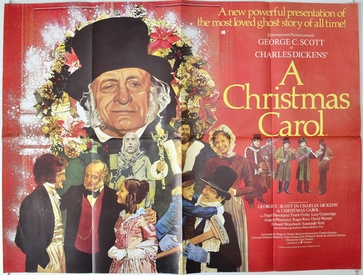
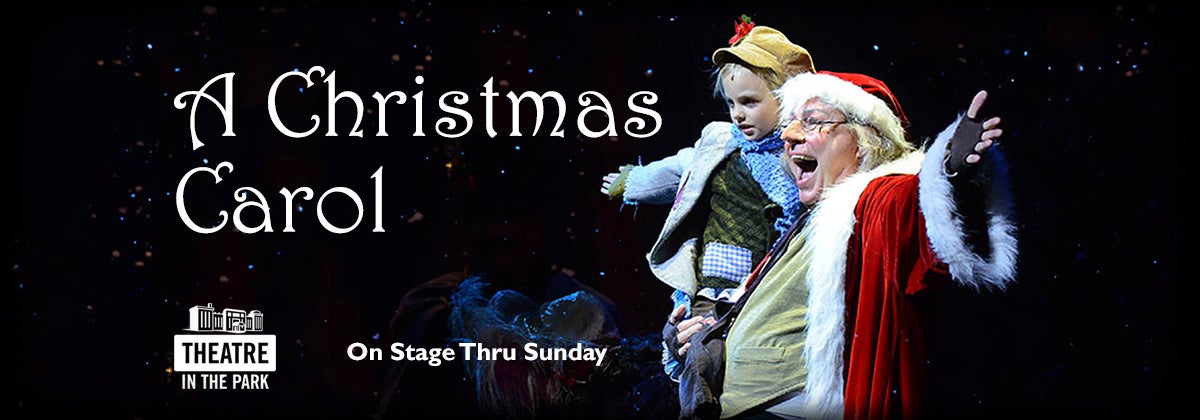
Keeping with what has become a tradition (can something be a tradition after only two iterations?) around these parts, let’s take a look at a Spirited Away story to wind down the holidays and get our 2017 going right. Last year, I promised a look at the most famous one and I’m finally delivering with A Christmas Carol. Originally penned by Charles Dickens in the mid-19th century, this story has become a staple of the holidays, seeing countless adaptations across both stage and film. If you’re ever passing through my hometown in December, swing by the Durham Performing Arts Center and give Ira David Wood III’s rendition as Scrooge a look.

Before diving into A Christmas Carol proper, I can’t help but muse if there’s something specific about this time of year that speaks to the Spirited Away narrative. I wasn’t even really thinking about making the holiday season on this blog a chance to reflect on holiday twists to my favorite arc-plot, though now I’m kind of curious how far it will go. The Disappearance of Haruhi Suzumiya and The Polar Express have become two of my favorite holiday films over recent years, and were selected for that reason and that reason alone. Given the nature of the plot analysis pieces on this blog, I suppose it shouldn’t be a surprise that they incorporate my favorite arc-plot.

Returning to my original musing, I think there is something to the end-of-year season and the Spirited Away story. It’s a frantic time of year where people are traveling all over the world, visiting family and friends, before ultimately returning home. It’s also a fitting time for introspection, self-evaluating how far you’ve come in this particular year. To top it all off, it can be stressful and reveal who we are in the most compassionate and sometimes in the most tragic senses. But when all is said and done, life moves on and we find ourselves back in the real world ready to take on the future. So whether we find ourselves lost in an alternate dimension, struggling with our very identity, or fighting over the last of the dark meat from the turkey, I think it should come as no surprise that there are a lot of holiday stories that also happen be Spirited Away in nature.

Let’s tackle the most famous…

Throughout all of its iterations and adaptations, A Christmas Carol is at its heart a very simple story. A greedy old miser by the name of Ebenezer Scrooge has contented himself with the trappings of his wealth, so much so that he has come to detest most everything else. The story begins on Christmas Eve, a day like any other for Scrooge. His minimum-wage salaried employee, Bob Cratchit is a normal human being and therefore is one to participate in the holiday. He requests the ‘morrow off to celebrate but Ebenezer ain’t having any of that. He allows the day off only as customary, but expects Bob hard at work the day after to make up for it. Scrooge also rejects his nephew’s dinner invitation and turns away two men seeking donations to feed and shelter the poor for the holiday. You know, just in case you were wondering if he had an redeeming qualities.

On his walk home from work, he encounters the ghost of his old business partner, Jacob Marley who warns Scrooge that he will be visited by three spirits that night. Marley was basically the only man Ebenezer ever respected, and one can assume they were kindred spirits in life. Thus, one might expect Scrooge to be concerned when he finds his old business partner shambling around the afterlife in chains as a form of atonement for his sins in life.

Humbug!

Before continuing, let’s outline (as (almost) always!) our list of themes common to Spirited Away stories:

  1. The protagonist has a first encounter with a being from another world before being forced there from his own, against his will.
  2. The protagonist’s initial experiences in this other world are lonely ones.
  3. The plot advances in a very episodic manner.
  4. There are guides along the way to help the main character out.
  5. The primary goal is to get back home, but minor goals appear along the way to produce our episodic nature of plot advancement.
  6. Destruction and reconstruction of the lead character’s identity is expected.

Already, Marley’s appearance checks off theme number 1. And now we encounter a sort of departure from this list. Throughout his experiences in the otherworld, Ebenezer is accompanied by one of the Christmas Spirits. While technically not alone, I would posture that the images portrayed to Scrooge by the Ghost of Christmas Past stir up feelings of loneliness by presenting him with times of joy spent at Christmas with his sister, his first employer (who served as a sort of father figure) and his one-time fiance Belle. Couple with the fact that he’s still human and the spirit is not, Scrooge does find himself somewhat lonely throughout his initial stay in the otherworld.

For comparison, Chihiro in Spirited Away spends an initial chunk of time in the otherworld with Haku, before being left alone to figure some things out for herself. Similarly (and recall, everything here is somewhat changed by whatever iterations of A Christmas Carol you’ve experienced), Scrooge is initially taken into his past by a spirit, but is left to learn whatever it is he’s supposed to learn by himself. A character’s strongest periods of growth in a Spirited Away story are when they’re left alone, and A Christmas Carol is no different.

Even in Dickens’s original writing, A Christmas Carol advanced to the tune of 5 Staves, or for our purposes, episodes. A prologue, one stave for each spirit, and a conclusion. Even the staves themselves are broken up into different scenes, between which Ebenezer is whipped somewhat suddenly. One minute he’s reliving the Christmas party with Fezziwig, the next he’s dancing with Belle, then talking to the Spirit of Christmas Present, etc.

Speaking of the Ghost of Christmas Present, A Christmas Carol is kindly very obvious with who our guides are.

Much like last year, you might expect some tweaking of the list to come at the expense of theme number 5. After all, this is just another holiday piece about arousing the Christmas spirit right? Wrong! While the spirits have a clear objective to bring Scrooge back into the fold of the holidays, the miser’s only goal (initially) is to endure the haunting and get back to his bed and his life. What minor goals appear than to produce our episodic nature? Here’s where theme number 5 falters.

While I could cop-out and say that Ebenezer’s minor goals are simply to make it through his stay with each successive spirit, that’s not really in the spirit of the Spirited Away arc. In all the cases we’ve looked at thus far, other corporeal beings are encountered by whoever has been Spirited Away, and those corporeal beings in the otherworld are in need of more urgent help so that it distracts the protagonist and produces episodic plot. Here, there are no other beings for Scrooge to directly interact with. More so than any of our other case studies, this Spirited Away journey could be passed off as just a simple, vivid dream.

Finally, the strongest element of A Christmas Carol in regards to our themes. The assault on Scrooge’s identity, its deconstruction, and ultimate reconstruction. The Christmas spirits attack by showing him as he was (when he was happy around the holidays), how others are (and how happy they are regardless of circumstance), and how things will end up if he continues as he is. With other Spirited Away stories the focus tends to be on the otherworld and the protagonist’s journey through it while their growth is only visible on the periphery, through their responses to events. Here the entire crux on the story is Ebenezer’s growth and character change.

And it means Scrooge’s transformation is one of the most dramatic in all of the plots we’ve taken a look at. There are very few developed side characters for us to care about, everything we see is seen through Scrooge’s eyes, and he is given very limited chances to actually interact with any other human beings. So while perhaps one of the simpler stories we’ve looked at, don’t confuse its simplicity with the ease of telling the story.

There’s a reason A Christmas Carol has been told times beyond counting in myriad different ways. For one, the story is somewhat timeless: a man who is one way, experiences a life altering event, and is now another way. It can be translated to any time fairly easily. Where the difficulty lies is in developing the characters in the opening act to given the visions of the past, present, and future weight. Without weight, there would be no point in drawing out the visions and you’d have fairly forgettable short story on your hands rather than a classic that has managed to endure nearly 200 years of retelling.

So let this be your holiday spirit lesson: the telling of a simple tale has to work all the harder to make that tale worth telling.

For further reading/viewing: Charles Dickens’s A Christmas Carol (1843) (however you’d like to enjoy it)

Narrative Voice in “Thomas Was Alone”

Image result for thomas was alone

Thomas was alone. Wow. A weird first thought to have. Thomas decided to start listing his observations, for posterity. 1) The whole alone thing. 2) Portals. They led somewhere, he had yet to figure out where. 3) Falling. Thomas was fantastic at falling. He was almost as good at falling as he was at observing.

We’re back! What’re we back from you ask?

Eh… let’s not get into that right now…

For the uninitiated, Thomas was Alone is a video game by Mike Bithell, an independent developer. Out of context, it’s a nifty little puzzle game where different sized and colored rectangles move through a world with surprisingly spectacular lighting and shading. They tend to move up and to the right, though they don’t always. Sometimes there are hazards, sometimes the rectangles do different things, it’s just a pretty chill 3-4 hour puzzle game.

So where did that opening quote come from? To the initiated, Thomas was Alone is a game about the first AI that manage to break from their test environments and begin the process of emergence. (one can assume the full breaking out of a lab and making their way into modern society). The game itself covers the journey of Thomas (an optimistic red rectangle with a knack for observation) and his colorful (pun intended) collection of friends who set off the process of emergence and then the subsequent generation that takes advantage and actually break out into our world.

Now, what differentiates the two? Apart from the descriptions of the general premises described above, and let’s be blunt, premises alone don’t make for great stories, this game relies on very little to communicate its story. There are no cut scenes, there is no direct dialogue between the characters, there’s no body language (they are rectangles after all). There are only two techniques Bithell has rely on to draw the player in: music and narration. The former can’t really stand on its own as a storytelling technique (it definitely can serve as an emotional one, but alas…), which means we are depending on the latter to build our story, almost in its entirety.

Danny Wallace also gives a fantastic performance as the voice of the narrator (BAFTA worthy even), but Bithell’s writing is strong enough that I think it carries Wallace more so than the other way around.

So what do we get from the narrator? Well, from the opening above we get an establishment for our main character. Without dialogue, we’re able to get a very firm grasp of this character in just a handful of sentences. But we also get something that often goes overlooked in storytelling: tone. What kind of story are we going to get?

“Thomas was alone” immediately gives off the feel of an introspective journey. It’s blunt. It’s a short opening line that establishes not only our main character’s name and his status, but offers obvious questions with it’s vagueness. Why is he alone? Where exactly is he? What happens next? From a storytelling perspective, this final question is critical. “Wow. Weird first thought to have.” And all of that goes out the window. Hopefully you cracked a little smile. This is going to be an introspective journey, but there’s going to be some humor. Don’t take yourself so seriously all the time, because this story won’t.

So this was how Claire would die. She knew it would happen eventually. She was rubbish at jumping and she moved slowly. She felt a little like her continued existence was braking some kind of natural order. The crumbling pillar was a dramatic death, she supposed. Wait. What? Claire couldn’t shake the felling that she was not, in fact, dead. It was at that moment that Claire realized she had super powers.

This is one of the heavier passages through the first third of the game. It whips the player all around the emotional spectrum. Your big blue rectangle (Claire) is sitting on a pillar which is slowly crumbling into the water around her. Water throughout the first quarter of the game has meant instant death for Thomas and all the other rectangles you’ve come across. So you’re left hoping that the game gives you a way out before you reach the water. In that time, it’s only natural to provide a bit of introspection and meet a character for the first time who’s thinking what she’s sure are her final thoughts.

And then, it pulls you out. Claire can float. No one else in the game can do this. She is a big, unwieldy, super hero. And it goes to her head. Throughout the entire story, passages like this one pull the reader from the depths of despair to the height of amusement. It’s something I’ve often applauded City of Thieves (by David Benioff) for if you’re not a gamer and want something with similar emotional narrative impact.

So, why do this? A radical sense of beauty (thanks Nakamura!). Despair can’t exist without joy and vice versa. For emotion to be tangible to an audience, your characters have to be able to feel what anyone from the real world can feel. And to guarantee the emotional reactions you want your audience to have (think: at the end), you need to put them through their paces. They’ve come in knowing that they are reading a book. They are looking at the remnants of a dead tree with ink splayed across the pieces. They are emotionally rigid. You need to warm them up, put them through some exercises, get them to smile, to frown. Because then you might be able to make them laugh or cry.

James had always been different. And not different in that kooky ‘OMG you have to meet my friend James, he’s totally insane’ kind of way.

Even 70% of the way through our introspective journey, where our characters are learning about their own abilities and uses, as well as how they might feel towards others, we’re getting lines like this. Entire characters, and how they might fit into the narrative, summed up in two sentences. This is a character who takes himself seriously, but not who we’re supposed to take seriously. The guy literally ignores the laws of gravity as they apply to everyone else. It’s absurd. And it makes perfect sense in this narrative.

Because putting the audience through their paces once is fine, but you don’t know if they’re going to read your work all the way through. Maybe they’ll stop for a break. Whatever your narrative voice, whatever your narrative techniques to keep them emotionally flexible, they must continue to do just that. The start of every chapter should assume the reader has had at least one day off. Maybe they can only read a chapter before bed.

You have to keep them emotionally flexible beyond the beginning. Because when the tension finally starts to mount, when things finally start to move towards a climax and a conclusion, you want them to mean something for your audience. You want them to hang with every character, to hope against hope, and fear for their safety.

Because only then, will lines like this carry weight:

Joe and Sam ran. They had no idea where these final portals would lead, but it had to be better than this. They leapt.

Your characters need personality, but without your writing possessing some personality of its own, it’s a struggle to communicate that. Your characters need a voice, but without your own voice they’re just characters on a page. No one will care. And a line like this, with simple verbs and simple structure, will be a forgotten one rather than the impactful final line of the story.

Make them care. String them along with every word. Push and pull ever so gently on their heart strings. Make them smile, make them furrow their brow. And once you’ve got them all loosened up, make them laugh and make them cry. There is no one without the other, remember to swing both ways in your writing.

Mike Bithell’s writing made Thomas was Alone a stellar game. Without it, I’m certain this would’ve just been some second-rate puzzle game in a world filled with them. His voice was strong enough to give his characters personalities of their own. They had no right to that.

They are only rectangles after all.

For further playing:
Thomas was Alone (2012), PC (also available on Xbox One, Playstation 4, and Wii U)